How to Choose Between Air-Pulsing and Traditional Vibration for Clitoral Pleasure
Let me start with the thing nobody tells you: not every body responds to the same type of stimulation the same way. Two people can try the exact same device and have completely different reactions. One feels incredible. The other feels like nothing, or worse, overstimulating and annoying.
The split usually comes down to one question: does your clitoris prefer vibration or air-pulsing sensation?
This distinction is not trivial. Getting it wrong means buying devices that don't work for you. Getting it right means finally understanding why some things feel amazing while others feel like a buzzing electric razor.
What vibration actually does to your body
Traditional vibration is exactly what it sounds like. A motor oscillates back and forth, creating rapid movement against skin. That movement triggers nerve endings through direct contact and friction.
Vibrators range from shallow, buzzy sensations (think of those cheap bullet vibrators that feel like your phone on silent) to deep, rumbly ones that you can feel through your whole pelvic floor. The difference is frequency and amplitude. Cheap vibrators usually max out around 5,000 to 7,000 Hz (vibrations per second). Quality vibrators often sit between 5,000 and 10,000 Hz, with deeper rumbling in the lower range.
Here's what makes vibration work so reliably: it's familiar. Most people have experience with vibration before they ever buy a sex toy. Your toothbrush vibrates. A phone vibrates. Your nervous system knows what to do with that input.
But vibration has a ceiling. The longer you use it, the more your nerve endings habituate (get used to it, basically). This is why some people find that a vibrator that felt incredible the first time stops working as well after a few minutes. Your body adapts.
Also true: vibration works best when there's consistent contact. If you're using it through layers of clothing, with a gap between the toy and your skin, or at an angle, the effect dulls fast.
What air-pulsing sensation is (and why it's different)
Air-pulsing is not vibration. I need to say that clearly because most people assume they're the same thing with a different name.
Instead of a motor vibrating back and forth, air-pulsing devices use suction. They create gentle pulses of air pressure against the clitoris. Think of it like someone repeatedly cupping their hand over the area and releasing, but at a controlled, rhythmic speed.
This sensation travels through your skin differently than vibration does. It stimulates pressure receptors instead of moving-touch receptors. Neurologically, your brain processes it as completely separate input.
Here's where it gets interesting: air-pulsing sensation is harder to habituate to. Because the stimulation is happening through pressure change rather than movement, your nerves don't tune it out the same way. Many people find they can use air-pulsing devices for longer without losing sensitivity.
Air-pulsing also has a unique advantage: it works through varying amounts of contact. If you're not centered perfectly, it still works. If there's a thin layer of fabric between you and the device, it still works. The pressure can reach tissue that direct vibration might miss.
The trade-off is that air-pulsing feels completely foreign to most bodies at first. You've never experienced anything like it before. So your nervous system needs a second to figure out what's happening.
How to know which one your body prefers
Honestly? The only real way to find out is to try both. But there are a few patterns I see in my practice that might help you predict which direction to start.
You probably prefer vibration if: You like the feeling of massage. You respond well to rapid, direct stimulation. You enjoy the sensation of something buzzing against your skin (like an electric toothbrush, or a partner's mouth). You get frustrated waiting for buildup and like fast intensity.
You probably prefer air-pulsing if: Intense, direct pressure sometimes feels uncomfortable or overstimulating. You like gentler, slower sensations. You enjoy the feeling of suction or mild pressure (like cupping your hand over your mouth). You find that standard vibrators feel exhausting after a few minutes.
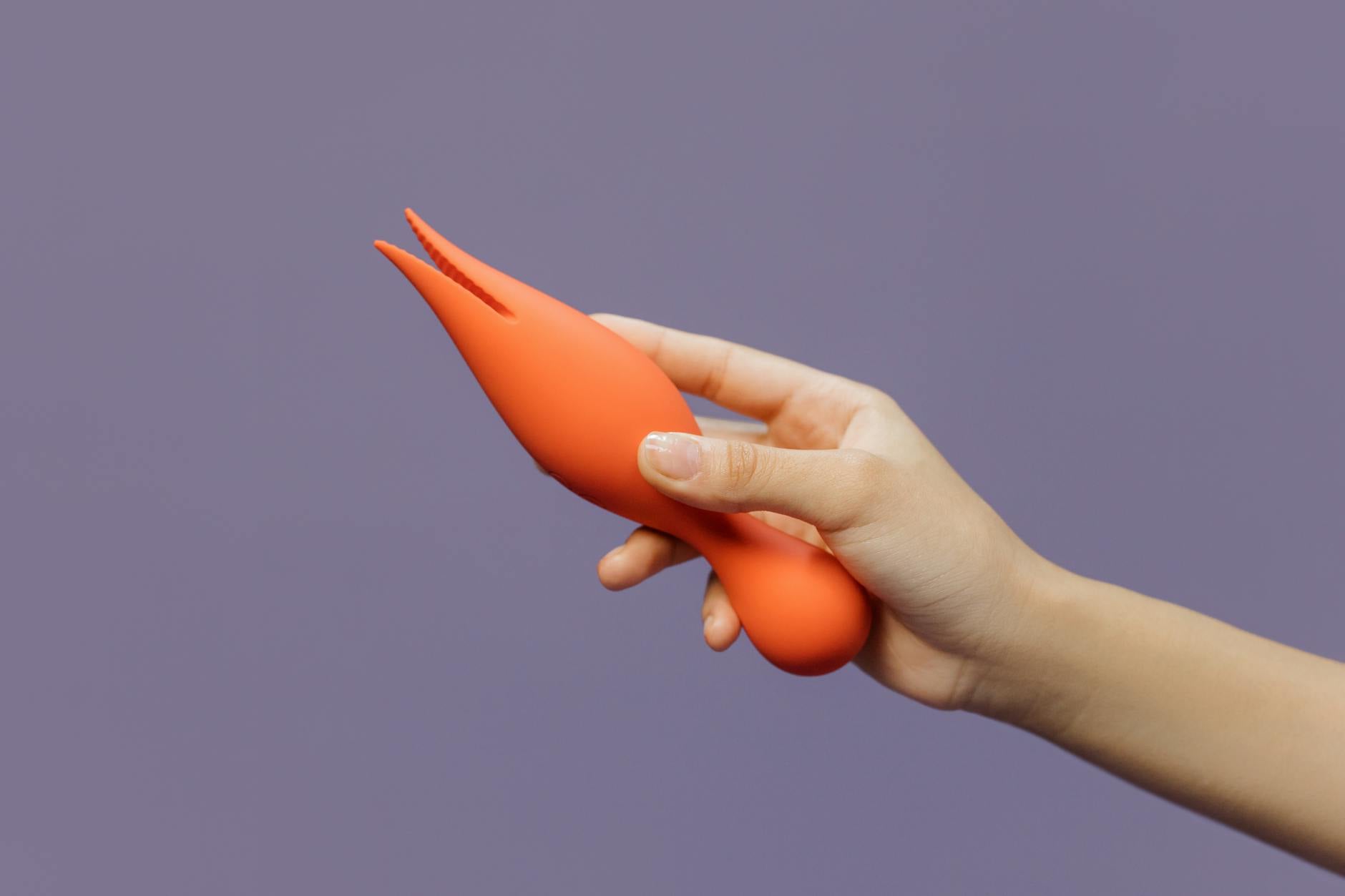
Sex toys like the Lem (which uses air-pulsing technology) work particularly well for people whose clitorises are sensitive to direct contact. The pressure-based approach often feels less intense on tender tissue while still building deep sensation.
Traditional vibrators like the Uno or Berri work for people who want straightforward, familiar-feeling stimulation and don't mind direct contact.
The intensity question (it's not what you think)
Here's where people get confused. "Higher intensity" does not automatically mean "better." It means stronger.
A high-intensity vibrator can feel amazing if your body likes vibration. It can feel exhausting or even painful if you don't.
Similarly, a gentle air-pulsing device can feel more satisfying than an aggressive one, depending on what your body is looking for.
When you're choosing between air-pulsing and traditional vibration, intensity should not be your primary factor. Match the sensation type first. Then adjust intensity within that category.
Most people find that starting low, within whichever sensation category they prefer, gives them the best first experience. You can always go stronger. You can't un-feel something that was too much.
Why sensation preference changes over time
Here's something worth knowing: what your body prefers is not fixed.
Your sensitivity shifts with your cycle, with stress levels, with age, with arousal depth, with what you've been experiencing recently. Someone who only liked vibration might try air-pulsing at a different time in their cycle and suddenly get it. Someone who preferred gentle pressure might find they want more intensity after a period of lower stress.
This is completely normal. It does not mean you made a mistake buying one device. It means your body is responsive and contextual, which is actually a sign of good sexual health.
I tell my clients: if you find you gravitate toward one sensation type, invest in that. But stay curious. Bodies change. What doesn't work for you now might be exactly right in six months.
Mixing vibration and air-pulsing (a legitimate strategy)
You don't have to choose one forever.
Many people find that layering sensations works best. Vibration during one phase of arousal, air-pulsing during another. Or vibration from a partner combined with air-pulsing from a toy. Or alternating between devices depending on the day.
If you're exploring this, start with short intervals. Ten seconds of one sensation, then the other. Notice what feels good and what feels like too much.
The people who get the most out of pleasure devices are the ones willing to experiment a little. Not in a pressured way, but in a curious way. Okay so, what if I tried this differently?
When to seek professional guidance
If you've tried both sensation types with genuine patience and attention, and nothing feels good, that's worth mentioning to a healthcare provider. Sometimes desensitization to pleasure is connected to medication, stress, or underlying health factors that are worth exploring.
If one sensation causes pain, stop using it. Pain is useful information. It means that approach is not right for your body at this time.
If you're not sure you're using a device correctly, our FAQs and safety guides walk through positioning and technique. Most pleasure devices come with instructions that cover the basics.
The bigger picture
Choosing between air-pulsing and vibration is not about finding the "better" option. It's about understanding your own body well enough to pick the tool that matches your actual nervous system, not the one that marketed itself the hardest.
Your clitoris has thousands of nerve endings. They deserve attention that works with them, not against them. Take the time to experiment without pressure. Your pleasure is worth that kind of thoughtfulness.
People also ask
Is air-pulsing better than vibration for sensitivity?
Neither is universally better. Some bodies find air-pulsing gentler on sensitive tissue because it uses pressure rather than direct friction. Others find vibration works fine as long as they start at low intensity. The key is trying both and noticing how your body responds. If vibration causes discomfort, air-pulsing is worth exploring. If air-pulsing feels confusing or unpleasant, vibration might be your match.
Can I use a lemon clitoral vibrator if I prefer air-pulsing?
The Lem is specifically an air-pulsing device, not a traditional vibrator. If you prefer air-pulsing sensation, it's an excellent match. If you prefer vibration, you'd want to explore traditional vibrators instead. The Lem works through suction technology, not oscillation, so it's a completely different experience from a buzzing vibrator.
How long does it take to know if a sensation type works for you?
I'd suggest at least three sessions with a new device type before deciding it's not working. Your body needs time to recognize what's happening and adjust. First time might feel weird or nothing. Second time might feel better. By the third time, you'll have real data about whether that sensation actually works for you.
Can both vibration and air-pulsing feel good in the same session?
Absolutely. Many people find that starting with one sensation, then switching to another keeps things interesting and prevents habituation. Some bodies also respond better to vibration during one phase of arousal and air-pulsing during another. Experiment and see what builds the best experience for you.
Is one type harder on your body long-term?
Neither is inherently harmful when used as directed. High-intensity vibration over extended periods can sometimes lead to temporary numbing, but it resolves quickly. Air-pulsing devices are designed to be gentler on tissue. What matters more is listening to your body and taking breaks if you notice discomfort or numbness.
How do I know if a vibrator's intensity is too high?
Too-high intensity typically feels uncomfortable, numbing, or like buzzing overwhelm. Your body should feel pleasure that builds, not shock or irritation. If intensity feels too much, lower it. If there's no lower setting, the device is not right for you. You should always feel in control and comfortable.