The orgasm timing mismatch nobody talks about
Let's be honest: one of you comes first almost every time, and nobody's happy about it. Your partner finishes and then the pressure's on you to hurry up. Or you're done and they're still working toward it, and the whole thing feels awkward now. Both scenarios kill intimacy.
Most couples just live with it. They assume orgasm timing is fixed, like height or eye color. It's not. And lemon vibrators specifically solve this problem because they shortcut the time gap between you.
Why the timing gap exists (and it's not your fault)
Clitoral orgasms typically take longer to build than penetrative ones. That's physiology, not a personal failing. Add in the fact that many people need direct stimulation to climax, and you end up in a situation where your partner reaches the finish line while you're still warming up.
The gap gets worse when you're mentally trying to speed yourself up. Pressure kills arousal. The moment you start thinking "I should be done by now," your nervous system tightens and everything slows down further. It becomes a self-fulfilling prophecy.
One statistic worth knowing: about 65% of people with vulvas don't consistently orgasm from penetration alone. That's not unusual. That's normal. But in a partnership where your partner relies on that route to finish, you're left scrambling for an alternative that doesn't feel tacked-on.
How lemon clitoral vibrators change the timeline
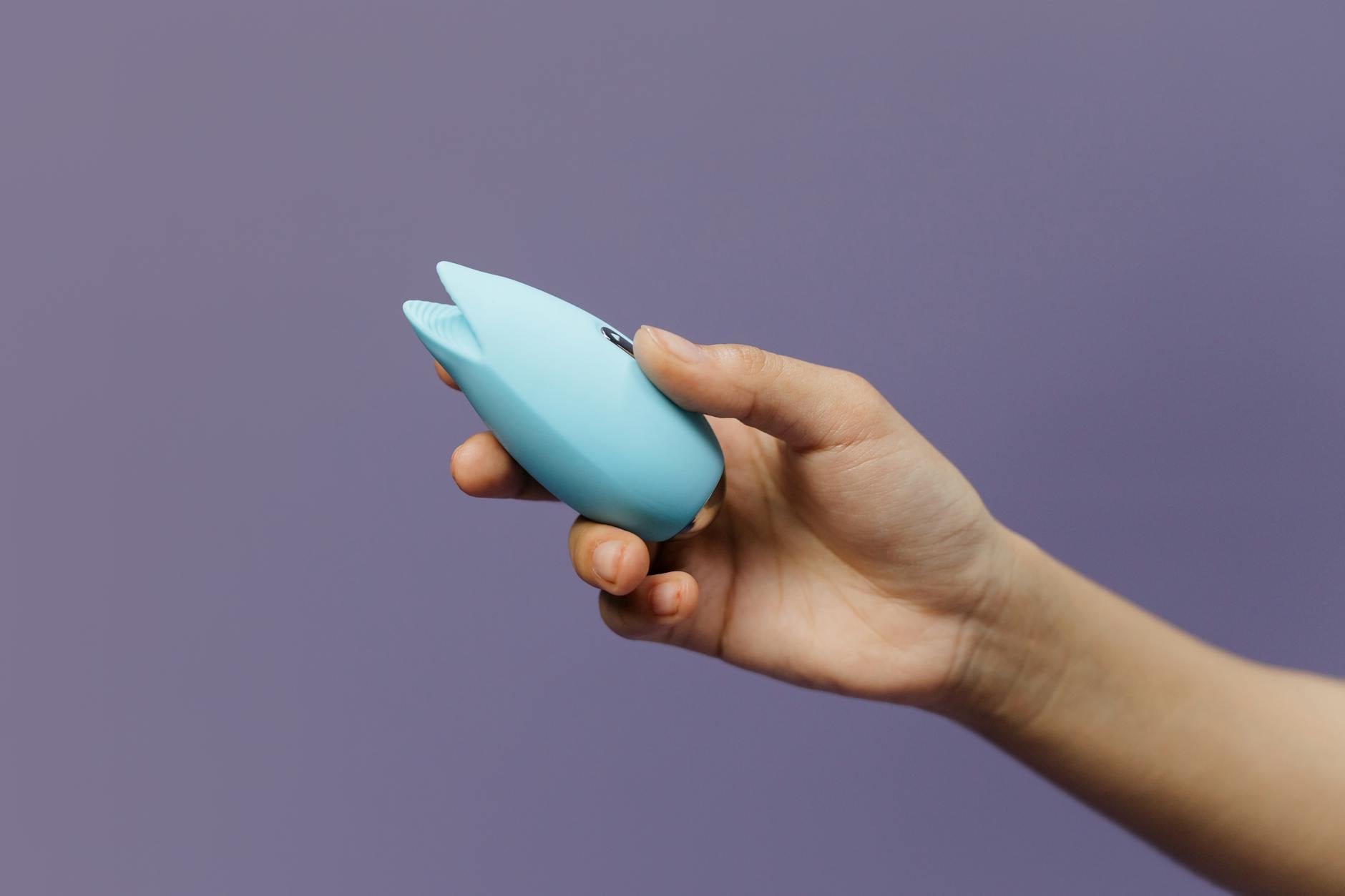
Here's what a lemon vibrator does differently. Instead of waiting for arousal to build through traditional stimulation, you introduce direct clitoral input. The suction-based design of lemon toys like the Lem bypasses all the warming-up time most vibrators require.
Most traditional vibrators need a build-up phase. You start at a low setting, gradually increase, and hope the intensity matches your body's response. With suction toys, the effect is almost immediate. Many people feel a shift in sensation within 30 seconds to a minute.
This matters for timing because it collapses the gap. Instead of you being five minutes behind your partner, you're now two minutes behind. Or equal. Or ahead. You've got control over when you reach that point.
The strategy: bring it in before penetration starts
The easiest fix is to skip the idea of simultaneous penetration altogether. Here's what works:
Start with foreplay that includes your lemon vibrator. Get yourself to a high level of arousal before your partner enters anything. You're not looking for orgasm yet. You're just bridging that "catch-up" gap so you're not starting from scratch when the main event begins.
When you're already at 70% arousal and they're just beginning, you're on much more equal footing. If they take 10 minutes to finish, you only need 5 to catch up instead of 15. The window closes dramatically.
The strategy: use it during penetration
This one requires communication beforehand, but it's worth having the conversation. Many people assume lemon vibrators are solo tools. They're not.
If your partner is comfortable with it, bring your Lem into the experience. Position it so you're getting clitoral stimulation while they're getting penetrative sensation. You're not competing for the same thing. You're each getting what your body needs.
The psychological shift here matters as much as the physical one. Instead of feeling like you're delaying things, you're both actively working toward orgasm together. That's a different energy entirely. Less waiting, more participating.
The strategy: use it after they finish
This one's straightforward and requires zero coordination. Let them finish however they finish. Then it's your turn. Your lemon vibrator plus their hands, mouth, or just their presence while you finish makes the whole thing feel less separate.
The key is establishing this as the plan beforehand, not as an afterthought. "I'm going to come second, and then I want you to stay and help me finish" sounds radically different than "Oh, you're still going?" The difference is intention.
Communication: the non-negotiable part
None of this works without talking about it first. And not a vague "maybe we should try using a toy" conversation. A specific one.
Try: "I notice I usually come after you, and it makes me feel self-conscious. I want to try bringing a vibrator into what we're doing so we're more on the same timeline. I'm thinking we could..." and then name the strategy you actually want to try.
Your partner needs to know three things. First, this isn't a criticism of them or your sex. Second, you're taking ownership of your pleasure instead of waiting for them to fix it. Third, you're suggesting this because you want to feel connected during sex, not separate.
That framing changes everything. It moves the conversation from "something's wrong" to "here's how we both get what we need."
What actually happens to pressure
The moment you introduce a tool that gives you control over your own timeline, the mental pressure drops. You stop monitoring their progress and comparing it to yours. You're busy managing your own arousal.
This is huge psychologically. Most of the timing issue isn't actually physiological. It's mental. You're anxious about taking too long, so you tense up, which makes everything slower. Your partner senses your anxiety and feels guilty, which makes it worse. A lemon vibrator breaks that cycle because it gives you agency.
You're not waiting anymore. You're participating actively in your own pleasure. That's a different headspace entirely.
The partner benefit (yes, there is one)
Your partner doesn't actually want to finish while you're still struggling. Most people find it hotter when you're coming too. It's more connected, less like they're performing solo while you work on homework.
When you introduce a lemon vibrator and actually get closer to orgasm simultaneously, the experience changes for both of you. Seeing you engaged with your own pleasure, watching you respond to something that works, feeling like you're both invested in the same moment. That's genuinely sexier than the standard "hurry up" dynamic.
Many partners report that introducing toys actually increases their own satisfaction because the whole interaction feels less transactional.
Troubleshooting: when it still feels weird
If you bring a vibrator in and it still feels awkward, the issue usually isn't the toy. It's usually one of two things.
First, you're still in your head about the timing instead of in your body. A lemon vibrator is just a tool. It can't fix anxiety that's psychological. If you're still monitoring your partner's progress and comparing timelines, you're still not present. The tool helps, but it's not magic.
Second, you haven't actually agreed on what the goal is. If your partner thinks you bringing in a vibrator means they did something wrong, or if you think it means something's broken about your body, you've got a communication problem, not a sex problem. Talk about what you both actually want from sex first. Then introduce the tool.
When to consider other factors
If the timing gap is extreme. like a 20-minute difference. there might be something else happening. Certain medications decrease arousal speed. Depression, anxiety, and stress all change your sexual response. Some people take longer after certain kinds of birth control. These are worth checking with a doctor about, separate from introducing a toy.
A lemon vibrator helps with normal variation. It doesn't replace medical attention if something's genuinely off.
Here's what actually changes
Bringing in a lemon clitoral vibrator when you and your partner have mismatched timing isn't about fixing you. It's about acknowledging that you have different bodies with different needs, and that's fine. You don't have to orgasm on the same schedule to have great sex together.
But you also don't have to accept a dynamic where one of you is always waiting. The tools exist now. Your pleasure matters. And most partners actually prefer sex where both people are fully engaged.
If you're ready to try this approach, start with the conversation. Be specific about what you want to try. And pick a tool designed for clitoral stimulation. Something like the Lem is built for this exact scenario: fast response, powerful sensation, easy to control. It's built for people who want to take charge of their own timeline.
Your partner doesn't want to finish alone. And you deserve to finish too, on your terms.
People also ask
How long does it take to orgasm with a lemon vibrator compared to manual stimulation?
Most people feel a noticeable difference within the first minute. Manual stimulation typically requires more time for arousal to build, while suction-based lemon toys deliver targeted sensation immediately. You might reach orgasm 5-10 minutes faster, depending on your body. That's not a universal rule, though. Some people get there faster, some take the same amount of time. What matters is that you've got control over the intensity and sensation rather than waiting for manual stimulation to build.
Can I use a lemon vibrator during penetrative sex with a partner?
Yes, absolutely. Position yourself so the vibrator reaches your clitoris while your partner penetrates. This requires some communication and positioning beforehand, but it's very doable. Many couples find this reduces the pressure of trying to orgasm from penetration alone while also helping with the timing gap. Start with a conversation about where you want it and how you want to hold it.
What if my partner feels insecure about me using a vibrator during sex?
This is a communication issue, not a toy issue. Your partner might think a vibrator means they're not enough, or that you prefer it to them. Have a conversation before you introduce anything. Explain that the vibrator helps you reach pleasure faster so you're more in sync with them. It's not a replacement. It's a tool that makes shared pleasure more likely. Many partners feel better once they understand the actual goal is connection, not avoiding them.
Should I use lube with a lemon vibrator?
Water-based lube can enhance sensation and reduce any friction that might be uncomfortable. It's not required, but it often makes the experience more comfortable, especially during longer sessions. Never use silicone lube with silicone toys. Stick to water-based if you're going to use anything.
Is it normal to take longer to orgasm than my partner?
Completely normal. About 65% of people with vulvas don't consistently orgasm from penetration alone. Orgasm timing varies wildly between people and even within the same person depending on stress, hormones, and arousal level. Nothing is wrong with you. Your body works the way it works. The goal is finding a rhythm that works for both of you, not forcing your timeline to match theirs.
How do I bring up using a lemon vibrator without making my partner feel like they're doing something wrong?
Frame it as a solution to a shared problem, not a criticism. Try: "I want us to be more in sync during sex so it feels more connected. I'm thinking I could use a vibrator to help me get to the same place faster. I'm not looking for something different. I just want us both to finish happy." That's collaborative language. It's about solving a problem together, not blaming anyone.