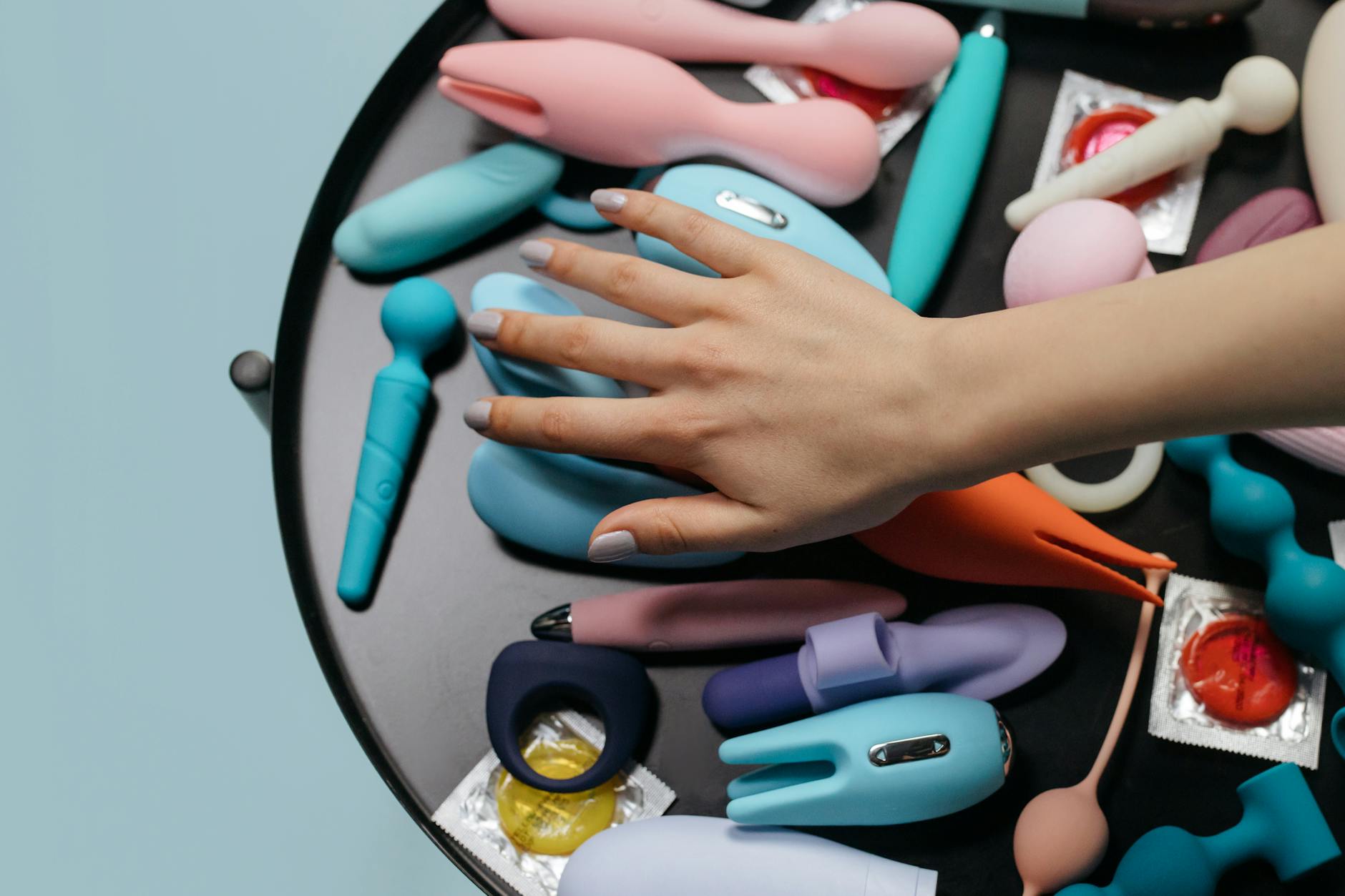
Here's the thing nobody tells you about new relationships
You're worried about bringing up toys. Your partner is probably worried about being bad in bed. These are not the same problem, but they can solve each other. That's actually the whole door opening.
Introducing lemon vibrators or any clitoral toy to a new partner feels like it requires a TED talk. It doesn't. It requires honesty, which is a lower bar than you think, and way better for both of you than silence.
Why the timing matters more than you'd think
There's a window. Too early and you're both still in the polite phase where you're not even sure if you like each other's coffee order. Too late and the sexual rhythm is already established, which means change reads as criticism.
The sweet spot is usually around the third or fourth time you're intimate. You've had enough experience to know you're attracted to each other, but not so much that changing the script feels like a pivot from something that's "working fine."
If you're in a new relationship and you already know you want to use lemon vibrators or a lemon clitoral vibrator during partnered sex, think about mentioning it when things are warm but not actively sexual. This might be the next morning, during a walk, or before things heat up that evening. Not in the middle of foreplay.
Why? Because mid-sex is a terrible time to introduce anything new. Blood is redirected away from the brain. You're both focused on sensation. A sudden "Hey, I want to use a toy" lands like an interruption, not an invitation.
What to actually say (without overthinking it)
You don't need a script. You need a principle. The principle is: lead with something true, then make it about both of you.
Possibilities that work:
"I've been thinking about trying toys together. I find clitoral vibrators really help me orgasm, and I'd like you to be part of that."
That's it. You've said:
- You're interested in exploring
- You have a reason (your own pleasure, which is legitimate)
- You want them involved (not replacing them, not a solo thing)
Or: "New partners are always a bit of a mystery to me in bed. I feel more confident and relaxed when I use toys. Would you be curious about trying that together?"
This frames it as about your comfort and lowering anxiety. Most partners appreciate honesty about nerves.
Or even simpler: "I like using vibrators. I'd really like to see how that feels with you. Are you open to it?"
Notice what's absent from all of these: apologies, justifications, or explanations of what's wrong with their penis. You're not saying "you're not enough." You're saying "this is what I like." Partners who are genuinely threatened by toys aren't the problem you solve with a better script. That's a deeper incompatibility, and it's better to know that early.
A partner worth keeping will ask questions. "Does it feel better than with me?" (Different, not better.) "Am I doing something wrong?" (No. You're just adding to something that already feels good.) "Will you need this every time?" (Depends. Let's figure it out together.)
These are all solvable conversations. The person who doesn't ask questions or who shuts you down? That tells you something important too.
The first time you actually introduce the toy
Physical nervousness is real and normal. Your hand might shake a little. Your partner might feel pressure. Pressure kills arousal. Kill the pressure first.
Consider starting without penetration or partnered sex. Show them the toy alone. Talk about what it feels like for you. Let them hold it. Ask them to watch while you use it. That takes the pressure off both of you to perform and lets them actually see what brings you pleasure.
This is sometimes easier than diving straight into partnered use. It's not a step backward. It's information sharing. You're teaching them what you like.
When you do use lemon vibrators or a lemon sexual toy during partnered sex, start with external stimulation only. Most people new to toys imagine they work like penetration. They don't. Clitoral vibrators are about sensation variety, not depth. Your partner might not understand this intuitively, so narrate a little. "I like it on setting two." "A bit slower." "Right there."
This isn't complicated instruction. It's the same thing you'd do if you were guiding their hand.
What to do if they seem hesitant or weird about it
Some partners get defensive. It's not always about the toy. It's sometimes about fear. Fear that they're not enough, that they're losing you, that toys mean you don't want them anymore.
These feelings are real. They're also not your responsibility to absorb or fix by abandoning what you want. But you can acknowledge them. "I'm not less attracted to you. I'm more comfortable with myself. That's different."
If someone's hesitation doesn't budge after an honest conversation, you have a choice: drop it and live with resentment, or recognize this as a sign of a deeper incompatibility. Both are valid paths. Neither is failure.
For partners who are curious but nervous, slow exploration helps. Let them control the toy sometimes. Let them experiment with settings. Some partners get more comfortable when they're also involved in the operation, not just observing. They're not a spectator. They're a participant.
The mental part that's harder than the physical part
Introducing toys to a new partner is only partially about the toy. It's mostly about vulnerability. You're saying out loud: this is what I like, this is what my body needs, I trust you with that information.
That's the scary part. The toy is just silicone and vibration.
The best partners aren't the ones who are immediately thrilled about toys. They're the ones who treat your pleasure like it matters as much as theirs. If someone gets defensive about a toy but also doesn't care whether you orgasm during sex, that's the actual problem. The toy is just where you finally noticed it.
Similarly, if someone's curious and enthusiastic but it's only because they're trying to impress you or perform the role of "guy cool with toys," that's different from genuine partnership around pleasure.
You're looking for someone who hears "I want to use a clitoral vibrator" and thinks "Great, I want her to feel good" instead of someone who thinks about what it means about them.
That distinction is worth the conversation.
Making it routine, not a big production
Once you've had the initial conversation and tried it once or twice, the goal is for it to become normal. Not every time. Just normal when you want it.
This means it stops being a negotiation and starts being part of your sexual repertoire together. Like using lube, or changing positions, or getting more comfortable.
If your partner is on board, you might store your lemon vibrators or lemon clitoral vibrator in a place where it's accessible without theatricality. A drawer instead of hidden in a box. This signals: this is a regular thing, not a secret.
If they're hesitant but not opposed, start small. Maybe you use it during solo time when they're present but not involved. Then during foreplay while they watch. Then during partnered sex. The slow ramp removes the shock value.
The goal is to get to a place where introducing adult toys feels as normal as suggesting a different position. It takes a few times, but it does happen.
When the conversation goes sideways
Sometimes a partner says no. Sometimes they say yes and then seem resentful. Sometimes they want to use toys but in ways that don't interest you.
These are real problems. They're also negotiable, up to a point. If someone is fundamentally opposed to any toys and you want to use lemon vibrators regularly, that's incompatible. That's not something communication fixes. That's something you decide about the relationship.
If someone says yes to toys but acts like they're a favor, a sign things aren't really aligned. Good sex requires both people to want what's happening. If one person is doing it to keep the other happy, that's a debt, not a partnership.
The hard truth is that bringing this up early in a relationship is actually a filter. It shows you whether your partner respects your autonomy and your pleasure. That's worth knowing fast.
People also ask
How do I know if my new partner is going to be weird about toys?
You don't, which is why you ask early. Some clues: they talk about sex in ways that center their performance as the main thing, they get defensive about anything that's not strictly intercourse, or they make jokes about toys instead of engaging seriously. None of these are absolute proof. But they're yellow flags worth paying attention to. The safest path is just to bring it up and see how they respond.
What if I introduce a toy and my partner thinks I'm not satisfied with them?
This is the most common fear, and it's usually not about the toy at all. Say it directly: "I like you. I also like this. These can both be true." If they keep interpreting it as criticism after you've said this clearly, that's a sign they need reassurance work that goes beyond the toy conversation. That's partnership stuff, not sex stuff.
Should I let my new partner choose the toy?
No. You should choose a toy that works for your body. Your partner can be curious about it, can watch, can participate in using it with you. But the clitoral vibrator is for you. If you're buying it to please them or to be less threatening, you'll end up with something that doesn't actually feel good. That defeats the whole purpose.
Is it better to mention toys before or after we've had sex?
After is usually easier. You've already navigated sex together. You know how they respond to feedback. Bringing it up before you've been intimate can feel theoretical. After, it feels like: here's something that could make what we just did even better. That's a different conversation.
What if my partner wants to use toys but only for their pleasure?
That's fine, and it's separate from you using toys. But if they want to use toys on you or with you in ways that don't feel good, that's when you use your voice. You're allowed to say: "I like this toy on this setting at this pace." If they don't listen, that's not about toys. That's about whether they listen to you at all.
How long should I wait before introducing toys if I'm seeing someone new?
Three to five intimate encounters is the sweet spot. You've had enough time to establish attraction and sexual chemistry, but not so much that the script is locked in. Earlier and it might feel like you're setting a condition. Later and it feels like a criticism of something you've already been doing.
The bottom line
New partners are already nervous about sex. You being clear and honest about what you want is actually a gift. It removes the guessing. It gives them information. And it tells them something important about you: that you know what you like and you're willing to say it.
That's attractive. That's also the foundation for actually good sex with someone new.
If you're ready to have this conversation, you're already more prepared than you think. The toy is just the tool. The real work is the honesty.
If you need more support thinking through how to navigate new relationship dynamics or communication challenges, we're here to help at /contact.