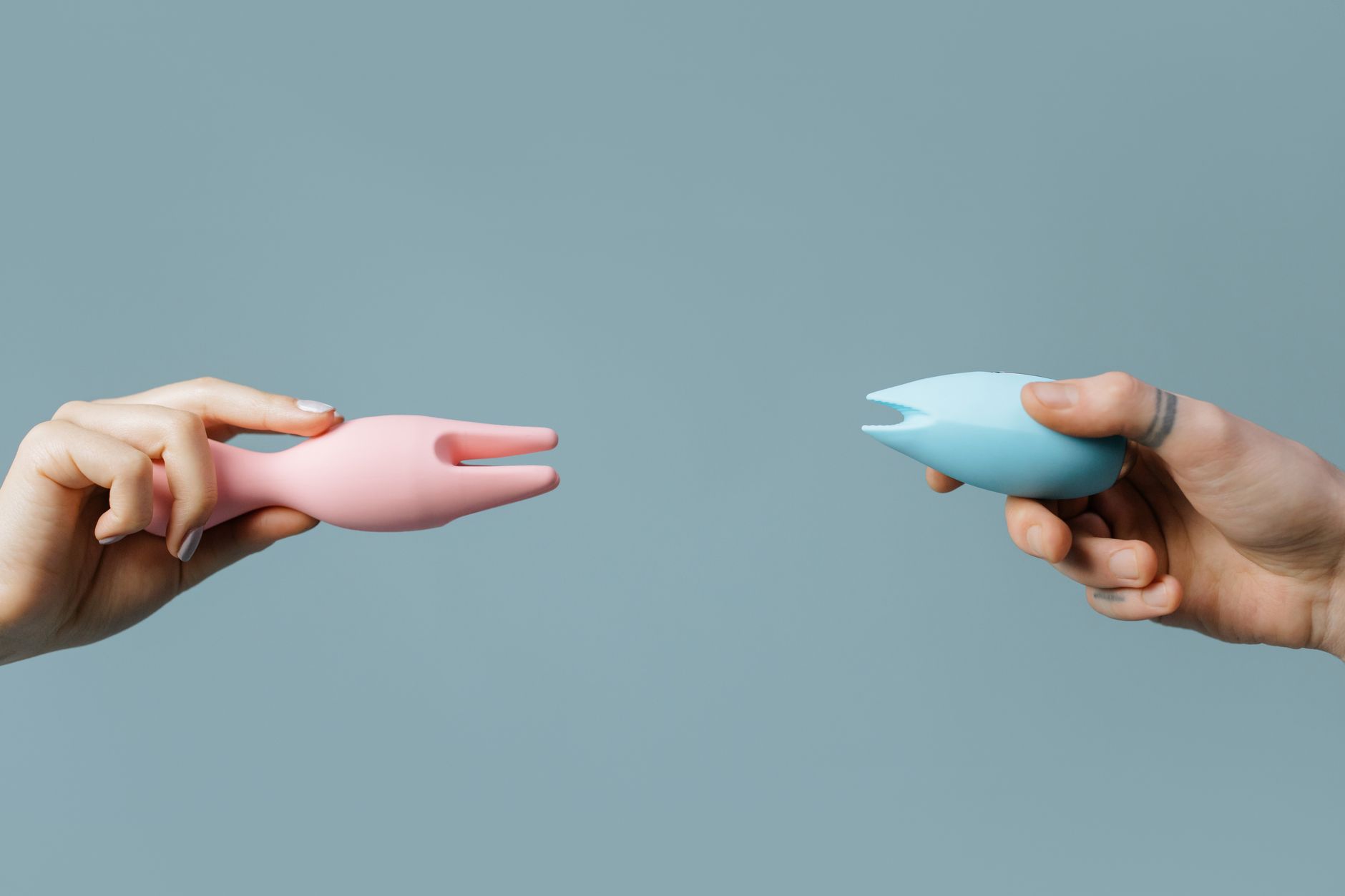
Here's the thing about starting at 40 and beyond
If you're picking up your first lemon vibrator in your forties, fifties, or later, you're not behind. You're actually in exactly the right headspace to get the most out of it. You know who you are. You're not orbiting someone else's timeline. And honestly, the pressure to perform is gone. That clarity alone transforms the whole experience.
I've worked with hundreds of people who discovered self-pleasure late, and the pattern is always the same. They arrive nervous but grounded. They have less noise in their heads than they did at 25. And they tend to understand their bodies better than they're giving themselves credit for.
Why lemon vibrators work so well when you're starting out
Lemon clitoral vibrators are purpose-built for clitoral stimulation using suction technology rather than straight vibration. If that sounds intimidating, it's not. Here's why they're often the right first toy for later-in-life exploration.
The clitoris has about 8,000 nerve endings concentrated in a small area. Most of them are on the outside, in the glans. Traditional vibrators buzz everything equally. A lemon vibrator or similar clitoral sucker creates a gentle rhythmic pulse that mimics what pleasure feels like naturally. It's not aggressive or overwhelming. You control the intensity.
For someone exploring for the first time, that matters. You get sensation without mystery. You're not wondering if you're using it "right." There's no wrong technique.
What to expect the first time you use one
Let's be honest. Your first session won't be pornographic. That's not the goal anyway.
When you turn on a lemon vibrator at pattern 1, you'll feel a gentle sucking sensation. It's warm, localized, and honestly a bit strange at first. Your brain might go, "Is this happening? Am I feeling this?" That's completely normal. The clitoris is less sensitized if you haven't been paying attention to it for years. It takes a minute to wake up.
Most people report that by 10 to 15 minutes in, sensation shifts. The strangeness fades. The rhythm becomes almost meditative. Some people reach orgasm that first time. Most don't, and that's equally fine.
The key thing: if nothing happens in 20 minutes, stop and try again another day. Pleasure isn't something you hunt down. It's something you build toward.
Setting yourself up for success
Three logistics matter before you start.
Privacy and time. You need at least 30 minutes where you won't be interrupted. This isn't because you're doing something wrong. It's because your nervous system needs to settle. If you're listening for footsteps or checking your phone, your body won't respond. Full stop. Make space.
Comfort and positioning. Lie down or recline somewhere you can relax completely. Pillows behind your back are your friend. You're exploring, not achieving. Comfort beats aesthetics every time.
Moisture and preparation. Even if you don't think you need lubricant, use a small amount of water-based lube around the labia and over your clitoris. Lemon vibrators work by creating suction, which works better on slightly dampened skin. This isn't about being "wet enough". It's about optimal sensation. Your body isn't the variable here. The tool is.
Working your way through the patterns
Most lemon clitoral vibrators have 3 to 5 settings. Start at the lowest.
Press the device gently against your clitoris, centered. You're not pushing hard. Imagine the pressure of a soft kiss. Hold it there for 30 seconds to a minute, breathing normally, noticing what happens.
Then move to pattern 2. Again, same gentle pressure. Spend a minute there. By pattern 3, you're getting a sense of what your body likes. Some people feel an immediate pull toward one pattern. Others find all of them pleasant in different ways.
Here's what you're listening for: increased warmth, subtle tingling, the urge to move your hips slightly, or a deepening breath. These are the signs that arousal is building.
If nothing is happening after 15 minutes, try a different spot. The most sensitive part of the clitoris for some people is the upper hood, not the glans. Experiment. There's no rush.
What happens when you reach orgasm (and when you don't)
Orgasm after 40 can feel different than younger orgasms you might dimly remember. They're often less explosive and more rhythmic. Some people describe them as a long, rolling wave rather than a peak. This is normal and not a sign something is wrong.
If you do reach orgasm the first time, great. Enjoy it. Notice what pattern and pressure got you there. Then set the device down and let your body settle.
If you don't, that's equally normal and expected. Your body is relearning this sensation after years of not prioritizing it. That's not failure. That's rediscovery. Try again next week. Most people need 3 to 5 sessions before orgasm becomes reliable.
The conversation if you have a partner
If you're in a relationship, telling your partner can feel loaded. Here's what I recommend.
Start with curiosity, not disclosure. "I've been reading about pleasure and body stuff. I'd like to explore it alone for a bit. It's not about anything we're doing or not doing. It's just for me." That's the full conversation you need to have.
You don't need permission. You don't need to convince them it's not weird. You're an adult exploring your own body. That's the baseline.
If they have feelings about it, that's a conversation for another time. Your pleasure is not their comfort project. If you want to invite them into this exploration later, you can. That's totally separate from this first phase.
Some partners actually feel relieved. They no longer have to be your only source of pleasure. Pressure lifts. Intimacy often improves.
Common things people worry about (and why they're usually not issues)
"Will it feel fake?" No. A lemon vibrator doesn't mimic sex. It mimics pleasure. Those are different things. That's actually the point. You're exploring a sensation in isolation, without the performance layer.
"Am I broken if nothing happens?" Not even slightly. Pleasure is learnable. If you haven't been paying attention to your clitoris, it takes time to wake back up. Try how to use lemon vibrators when you have no sensation down there if numbness is part of your story.
"Will this mess up my relationship?" No. Exploring your own pleasure almost always improves intimacy. You understand yourself better. You can tell your partner what works. You're less dependent on them for satisfaction. All wins.
"Is it normal to feel guilty?" Yes, and it usually passes. You were probably taught that your pleasure isn't a priority. Unlearning that takes time. The guilt doesn't mean you're doing anything wrong.
When to expect to feel different
Give it five sessions over two to three weeks. That's the timeline I usually see for people starting out.
By session two or three, the device itself feels less foreign. By session four, you usually know which patterns feel good. By session five, most people either have reached orgasm or have a clear sense of what direction to go in next.
Some people move on to exploring with a partner after this. Others are happy exploring solo. Both are complete experiences.
The bigger shift is emotional. After your first few sessions, something unlocks. You recognize that your pleasure is legitimate. Your body has capacity you didn't know about. Your forties, fifties, sixties aren't a deadline. They're a beginning.
FAQ: Starting pleasure exploration over 40
Is it weird to start exploring pleasure this late in life?
Not weird. Common. Tons of people don't prioritize their own pleasure until their forties or beyond. By then, you have self-knowledge and confidence that younger people don't. You know what you like in other areas of your life. Pleasure is just another thing to get curious about.
How long before I feel an orgasm with a lemon vibrator?
For most people starting out, 3 to 5 sessions over 2 to 3 weeks. Some feel something on the first try. Others take longer, especially if they've never explored solo before. There's no standard timeline. If it takes 10 sessions, that's not a problem. You're building something, not racing to a finish line.
Will a lemon clitoral vibrator feel different than a regular vibrator?
Yes. The suction action is smoother and less buzzy than traditional vibrators. For people starting out, especially those with sensitivity or numbness, the sensation is often easier to feel. It's not jerky or overwhelming at the lowest settings.
Should I use lubricant with a lemon vibrator?
Yes, a small amount of water-based lube helps. Even if natural lubrication is present, a bit of lube reduces friction and makes the suction feel smoother. It's not a sign your body isn't working. It's just optimal setup.
What if my partner wants to be involved in this exploration?
That's a conversation for later, after you've spent a few sessions alone. You'll know your body better and can guide them. If you want to involve them from the start, that's your choice. But I usually recommend a solo foundation first. You learn without performance pressure.
Is it normal to feel emotional during or after?
Yes. Your body releases oxytocin during pleasure. Your nervous system relaxes. Sometimes that brings up feelings you've been holding. Some people cry. Some feel emotional release. Some just feel peaceful. All of it is normal. It doesn't mean anything is wrong.
You're not starting late. You're starting right on time.
If you've reached your forties, fifties, or beyond without exploring pleasure solo, you're not behind. You're exactly where you need to be. You have self-awareness, boundaries, and the ability to prioritize yourself. Those are actually assets younger people don't have.
A lemon clitoral vibrator is just a tool. A good one, though. It's designed for your body, not an abstraction. It gives you clear sensation without overwhelm. And honestly, having a specific tool designed to feel good is permission. Permission to take up space. Permission to prioritize your own experience. Permission to be alive in your body.
Start small. Stay consistent. Be patient with yourself. Your pleasure is not a project someone else owns. It's yours. And you get to define what it looks like.
Questions? Reach out to our team. We're here to help make this feel less scary and more exciting.