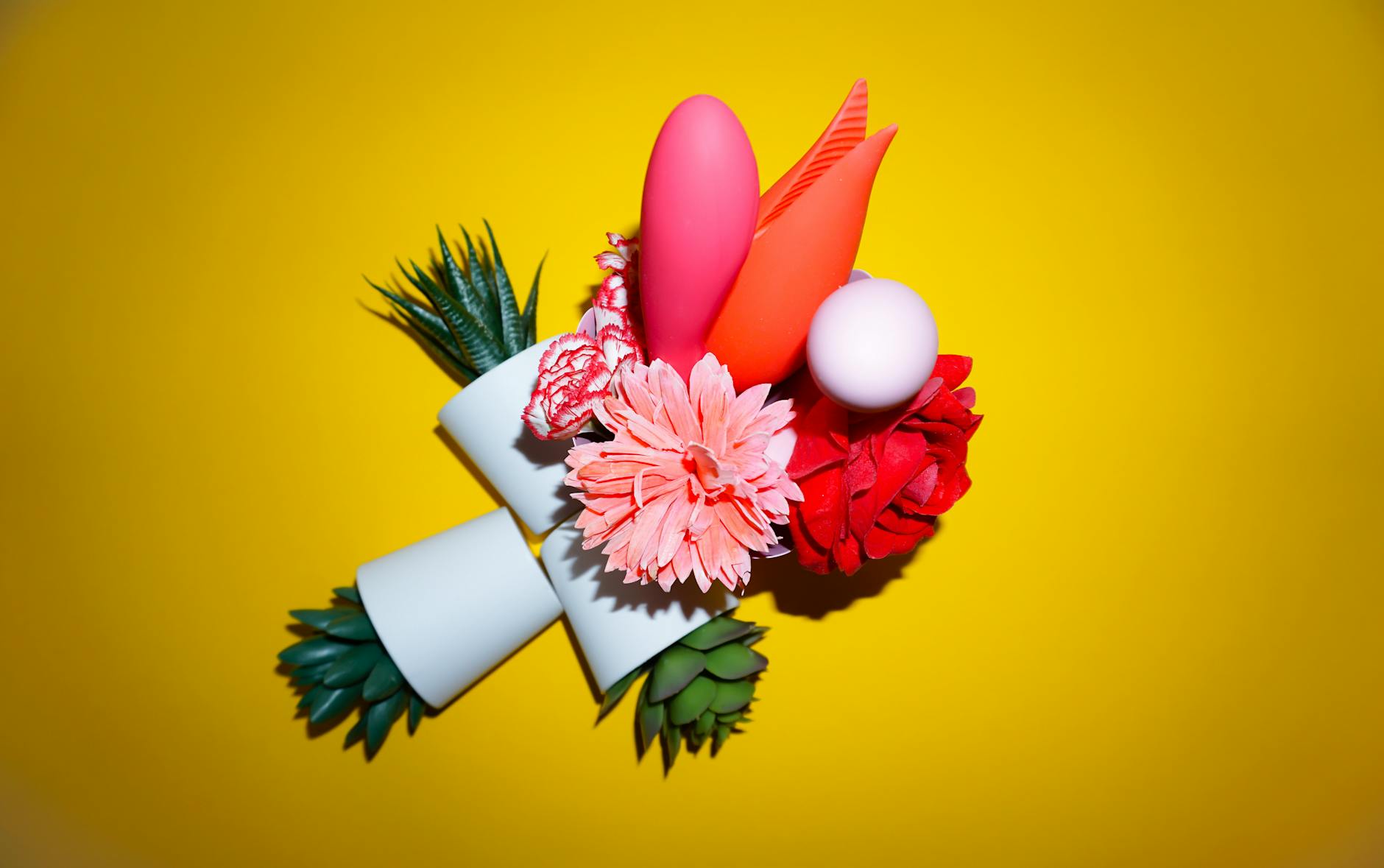
Let's talk about what your cycle actually does to pleasure
Your lemon vibrator doesn't change. Your clitoris does. Every month, hormonal shifts alter blood flow to your vulva, change tissue sensitivity, and shift how quickly your nervous system fires up. That's not a flaw in the toy or in you. It's biology doing its job.
Here's what most people don't realize: the same settings that feel amazing on day 8 might feel too intense on day 23, or weirdly muted on day 3. You're not losing sensitivity or gaining it randomly. You're moving through predictable phases, and if you work with them instead of fighting them, your pleasure actually deepens.
Phase one: menstruation (days 1-5)
During your period, estrogen and progesterone are bottoming out. Your clitoris has less blood flow, tissues are less plump, and sensitivity typically dips. You might feel like you need harder, more direct stimulation to register anything at all.
Here's the thing though: this is actually when many people experience their deepest orgasms. Orgasm itself can help with cramping and mood by releasing endorphins. But the pathway to get there often changes.
With lemon vibrators, I recommend dialing up the intensity slightly during this phase. If you normally use pattern 3, try 4 or 5. The suction mechanism of air-pulsing toys like the Lem becomes especially useful here because it doesn't rely on vibration frequency alone. Instead, it creates that rhythmic pressure that can feel more satisfying when your clitoris is less engorged.
Also? Warm up longer. You might spend 15 minutes here instead of your usual 8. A longer warm-up compensates for the lower baseline arousal and gives your nervous system time to build the response.
Phase two: follicular phase (days 6-13)
Estrogen is climbing. Your clitoris becomes more engorged, tissue thickens, and nerve sensitivity climbs steadily. Around day 10-12, many people hit a natural peak in sexual desire and physical responsiveness.
This is when your lemon vibrator might actually feel too intense if you stick with menstrual-phase settings. Your clitoris is literally more sensitive now, so the intensity you needed last week now feels sharp or overwhelming.
I tell clients to back off by one or two levels during this phase. If you jumped to level 5 during your period, dial it back to 3 or 4 here. Your orgasm might arrive faster, and it might feel sharper and more localized instead of the deeper sensation from the previous phase.
This is also the window where many people feel most comfortable trying new patterns or exploring longer sessions. Your energy is higher, your pain tolerance is up, and pleasure responsiveness is at its yearly peak.
Phase three: ovulation and luteal transition (days 14-20)
Ovulation happens around day 14, and there's a brief dopamine surge. You might feel a quick spike in desire and sensation, then it softens again as progesterone starts to rise.
Progesterone changes the game. It increases body temperature slightly, can make your clitoris feel less reactive, and often comes with a shift toward wanting deeper, longer stimulation instead of sharp, focused pressure. Many people describe this as wanting a "building" sensation rather than a quick pop.
With your lemon vibrator, stick with moderate settings but focus on longer warm-up and extended sessions. You're not chasing a quick orgasm here. You're building arousal over 20-30 minutes and letting the sensations compound. The Lem works beautifully for this because you can switch between patterns mid-session, creating layers of stimulation.
Phase four: late luteal phase (days 21-28)
Progesterone peaks, then crashes. This is often when people feel least interested in sex and most sensitive to overstimulation. Skin can feel irritated, emotions are heightened, and clitoral sensitivity can feel erratic. Some days it's sharp, some days it's almost numb.
This is not the time to push harder. In fact, this is when many people benefit from stepping back entirely or shifting to external stimulation only. If you do use your lemon vibrator here, use your lowest comfortable setting and pair it with plenty of lubrication, even if you don't normally need it.
Listen to your body here instead of forcing a routine. Your pleasure matters just as much this week as any other, but the pathway might be slowed or softer. That's normal.
Tracking your own pattern
Every person's cycle is different. Someone with a 21-day cycle moves through these phases faster. Someone with a 35-day cycle spends longer in each phase. Hormonal birth control, PCOS, perimenopause, and stress all shift the pattern.
The most useful thing you can do is track your own response for two or three months. Keep a simple note: date, which settings felt good on your lemon vibrator, how long warm-up took, and what you noticed. You'll start to see your personal rhythm emerge, which is way more useful than any generic advice.
There are apps for this, or you can use your notes app. No judgment, no elaborate system. Just enough data to recognize your own cycle of pleasure.
Why sensitivity shifts matter more than intensity
A lot of people assume that if they're not feeling much, they need a stronger toy. That's often backwards. Sensitivity shifts mean you need to adjust the approach, not necessarily the equipment. Longer warm-up, different patterns, more lube, a different position that changes pressure angle. These micro-adjustments often work better than switching to a more intense toy.
This is why tools like the Lem work across so many different phases. The adjustable patterns mean you're not locked into one vibration frequency. You can meet yourself where you are.
The emotional piece underneath
Hormones don't just change physical sensation. They also shift mood, stress capacity, and how present you can be in your own body. During high-progesterone weeks, you might feel less interested in solo pleasure because you're also feeling less interested in most things. That's not broken desire. That's hormones.
Giving yourself permission to want different things in different weeks is actually huge. Some weeks your lemon vibrator is a maintenance routine. Some weeks it's the highlight. Both are fine. The goal isn't consistent pleasure. It's pleasure that works for where you actually are.
What to do if your cycle is irregular
If your period is unpredictable, comes twice a month, or you're approaching menopause, this framework gets fuzzier. You can't rely on day-counting the same way. Instead, pay attention to the sensations themselves. Are you noticing bloating and mood sensitivity? You're probably in a high-progesterone phase. Do you feel energized and your clitoris feels responsive? Probably follicular.
You can also track other markers: cervical mucus consistency, basal body temperature if you want to get technical, or just your energy level and how easily you get aroused. These become your anchors instead of a calendar.
If you're on hormonal birth control, your hormone levels stay relatively flat, so you might not experience these phase-based shifts at all. That's completely normal and doesn't mean anything is wrong with your pleasure or your lemon vibrator.
When cycle-based shifts mean something else
If your sensitivity swings are extreme. like orgasm is completely inaccessible one week and happens in 90 seconds the next, or if pain appears in certain phases, that's worth mentioning to a gynecologist. Hormonal imbalances, endometriosis, and other conditions can create bigger mood and sensation swings than a typical cycle.
Same thing if your cycle itself is wildly irregular or you're spotting between periods. Your lemon vibrator isn't the issue then. Your hormones need a check-up. A good GYN can help you understand if something's off and what actually helps.
For most people though, these phase-based shifts are just normal biology, and the fix is less "stronger toy" and more "smarter approach."
FAQ: your cycle and pleasure questions answered
Does my menstrual cycle affect all vibrators the same way?
Yes. Every vibrator responds to clitoral sensitivity shifts, but the experience differs. Vibration-based toys feel the intensity changes most directly, while air-pulsing toys like the lemon vibrator let you adapt through pattern changes and rhythm. That flexibility makes cycle tracking easier with adjustable-pattern toys.
Is it normal to want nothing to do with my vibrator during PMS?
Completely normal. Progesterone peaks right before your period, and it often suppresses sexual interest alongside increasing irritability and fatigue. Your lemon vibrator will still be there when you cycle back around. Forcing it during a low-desire week often feels more like a chore than pleasure.
Can I use my lemon vibrator if I have irregular periods?
Absolutely. You just track sensation instead of dates. Pay attention to when stimulation feels intense versus muted, and use that as your guide for adjusting intensity. Many people with irregular cycles actually find this more helpful because they're tuned into their body's actual signals rather than expecting day 15 to feel a certain way.
Does orgasm feel different at different points in my cycle?
Yes. During high-estrogen phases (around ovulation), orgasms often feel sharp, quick, and localized. During high-progesterone phases, they often feel deeper, take longer to build, and involve more of your body. Neither is better. They're just different flavors of the same thing.
Will tracking my cycle make me obsess over pleasure?
It might for the first month. Then it becomes background knowledge you use intuitively. You stop thinking "oh, I'm on day 18, so I should try pattern 2" and instead just grab your lemon vibrator and feel what you need. The tracking is the setup. The intuition is the payoff.
What if I'm on birth control? Do I still experience these shifts?
Depends on your method. Hormonal birth control (pills, patches, rings, implants) usually flattens your hormone cycle, so you probably won't notice major sensitivity swings. Non-hormonal methods (copper IUD, condoms, fertility awareness) let your natural cycle through, so you'll likely notice these shifts. Copper IUD users sometimes report even stronger cycle-based sensation changes because their natural hormones aren't being suppressed.
The real takeaway
Your cycle isn't a bug in your pleasure system. It's a feature. Once you understand how your hormones actually shift sensation, you can stop fighting them and start working with them. Your lemon vibrator doesn't need to change. Your approach just needs to be a little smarter about meeting yourself where you are, week to week. That's when pleasure becomes something you don't have to chase. It just becomes part of your rhythm.