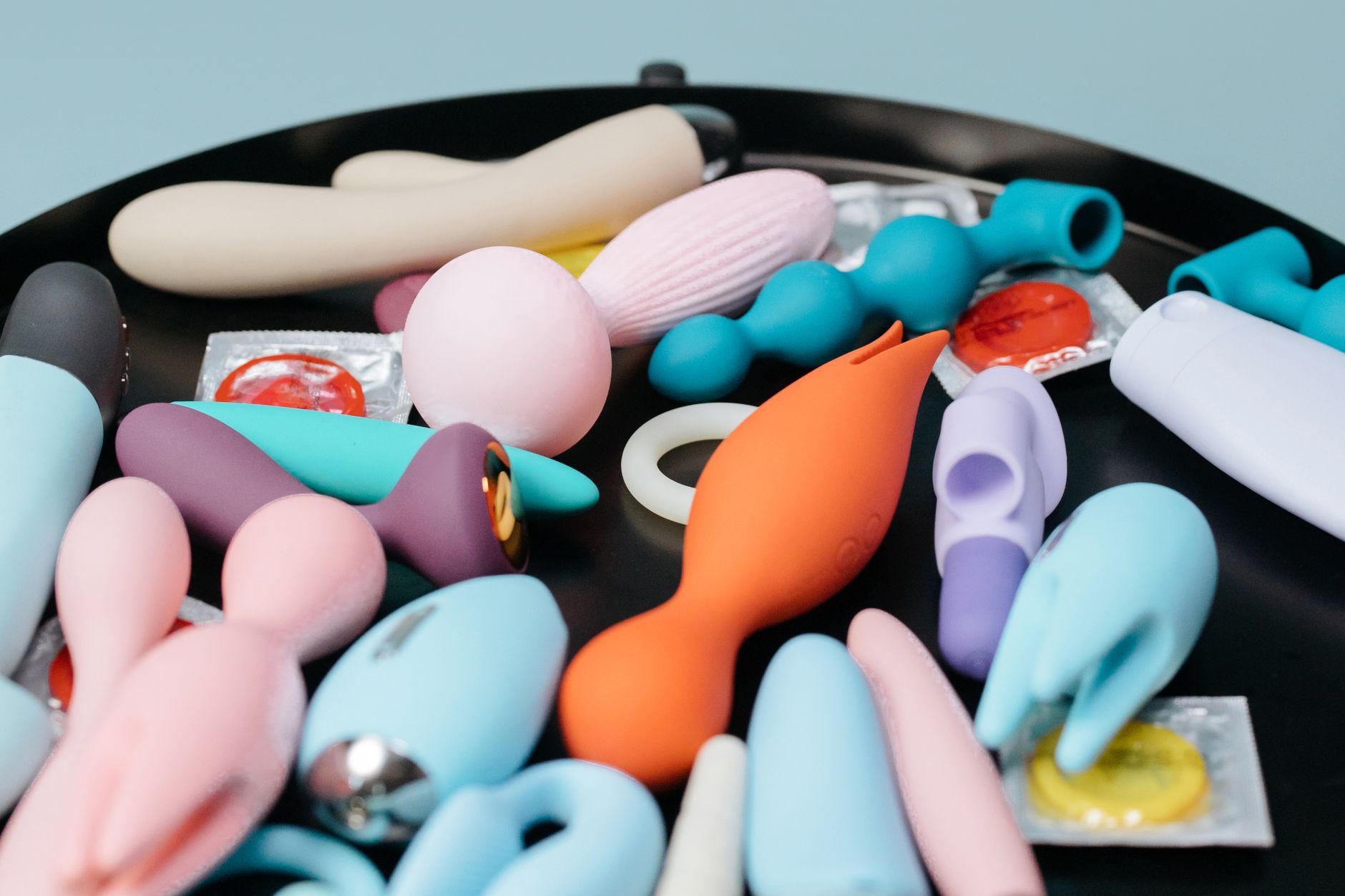
Here's what nobody tells you about clitoral toys
You walk into a shop, online or otherwise, and suddenly you're drowning in options. Vibrators, wands, suction toys, rabbits, air-pulse devices. Everyone claims theirs is "revolutionary." Most of them work fine. But fine is not the same as right for your body.
The real difference comes down to physics, not marketing. How a toy stimulates your clitoris changes everything about whether you'll actually use it, whether you'll enjoy it, and whether it'll give you the kind of pleasure that makes you want to come back.
The fundamental divide: vibration versus suction
Most clitoral vibrators work the same way. A motor vibrates at a certain frequency, measured in Hz. You press it against your body, and the vibration travels through tissue. This is effective, familiar, and it works for plenty of people.
Suction toys, including lemon clitoral vibrators, work differently. Instead of moving back and forth, they create a gentle seal and pulse air around the clitoris. No direct friction. No numbing from sustained contact. The stimulation is rhythmic but indirect, which sounds less intense until you try it.
The practical difference: vibration fatigues nerves. After 10 or 15 minutes of the same rhythm, your body stops responding as sharply. You either need to change speeds, take a break, or keep going and accept that the sensation is flattening. Suction doesn't have this problem. The clitoris stays responsive because the stimulation pattern is different. Nerve receptors that have quieted down in response to vibration wake back up when you switch to pulse.
Why material and softness matter more than you think
A vibrator can be silicone, TPE, glass, metal, or plastic. All of these materials have different properties. Hard materials like glass and metal transmit vibration very efficiently, which means you feel it intensely. Soft silicone diffuses the vibration slightly, which makes it feel gentler.
With lemon vibrators, you're working with a broad, soft contact surface. Most traditional vibrators concentrate stimulation into a smaller area. The lemon's design means pressure is distributed, which reduces the risk of overstimulation and discomfort.
If you've ever used a wand vibrator and found that 10 minutes in, the sensation starts feeling almost numb or even slightly painful, you've experienced what happens when a small amount of pressure delivers a lot of vibration to a concentrated area. Over time, that feels aggressive. The lemon's wider contact point changes the game.
The sensitivity question: why broader contact wins
Your clitoris has about 8,000 nerve endings packed into a small space. But it's not one uniform nerve. Different areas are sensitive to different types of touch. The glans (the visible part) is extremely sensitive. The frenulum (the underside) responds differently. The hood and surrounding tissue matter too.
When you use a vibrator with a narrow tip, you're basically ignoring most of this anatomy. You're hammering one small zone. A suction toy or a vibrator with a wider head engages more of these nerve endings at once. This isn't about "better." It's about efficiency. You're using the tool that matches the actual shape of what you're stimulating.
Traditional vibrators do work, but they often require you to position yourself perfectly, adjust pressure constantly, and spend more time finding the right angle. Lemon vibrators reduce that friction. The design lets you focus on the sensation instead of the mechanics.
Speed and pattern: why variety is everything
A basic vibrator has 3 or 4 speeds. A fancy one has 10 or 12. But here's the truth: most people use the same speed every time. They find one that works and stick with it.
The problem is your body adapts. Fast. By the third or fourth time you use the same pattern, your nervous system is already getting used to it. You're not feeling less pleasure because you're broken. You're feeling less because your body is literally doing its job, which is to adapt to repeated stimulus.
With lemon vibrators and similar suction devices, the pattern variety is built into the physics. Even if you're using the same "speed," the way the sensation lands on your body is different moment to moment because suction and pulse interact with tissue differently than vibration does. This keeps your nervous system engaged longer.
If you're used to traditional vibrators and find yourself needing to go faster and faster to feel anything, this is what's happening. You're not numb. The toy's pattern just stopped surprising your body.
The durability and maintenance equation
Vibrators have motors. Motors wear out. A basic vibrator might last a year or two with regular use. A quality vibrator might last five years or more. But there's maintenance involved. Most need to be charged, cleaned after every use, and kept away from moisture or temperature extremes.
Lemon vibrators are designed with longevity in mind. The motor systems are robust, the materials are medical-grade silicone, and the overall engineering is such that the toy lasts through consistent use. Plus, because the stimulation isn't creating the same nerve fatigue, you're less likely to push the toy to its limits, which extends its life.
From a practical standpoint: a toy you can rely on and that won't degrade after six months is worth the investment. You'll actually use it, which means you'll get the pleasure benefit instead of having a drawer full of expensive toys you abandoned because they stopped working or stopped feeling good.
When traditional vibrators still make sense
This isn't a post about why suction toys are "better." They're different. For some people, and in some contexts, a traditional vibrator is exactly what you need.
If you have a partner and want something during partnered sex, a small, discrete vibrator might be easier to integrate. If you prefer intense, localized stimulation and adapt slowly to patterns, you might genuinely enjoy a high-intensity vibrator. If you're traveling and need something compact, a basic vibrator takes up less space.
The advantage of understanding the difference is that you can choose based on what actually serves you instead of buying whatever has the best marketing or the most reviews. You're matching your nervous system to the tool, not the other way around.
The pleasure recovery angle: why variety matters
If you've been using the same vibrator for a while and noticed diminishing returns, switching to a different type of stimulation works. A lot of people find that rotating between a lemon vibrator and a traditional vibrator keeps sensation fresh. You're giving different nerve pathways a chance to recover while still getting pleasure.
This is especially useful if you're working through pleasure recovery after numbness or reduced sensation. A vibrator might not work initially, but a gentler suction approach can help your sensitivity return. Once you've got baseline sensation back, you can reintroduce vibration without overwhelming yourself.
Or you're in a season where stimulation needs to be gentler, like during menopause or hormonal changes. A lemon vibrator's broader contact and suction mechanism is gentler on thinner, more sensitive tissue.
The cost and accessibility question
A decent vibrator costs between 30 and 100 dollars. A quality lemon clitoral vibrator sits in that range too. The upfront cost is similar, but when you account for durability, the pleasure return per use, and the fact that you'll actually keep using it instead of abandoning it, the math changes.
You're not paying for a gimmick. You're paying for engineering that actually works with your body instead of against it. That's worth something.
Common questions about toy comparison
How long does it take to get used to a lemon vibrator if you've only used traditional vibrators?
Most people feel a difference immediately, but the learning curve is real. You're used to a certain sensation, so at first, suction might feel weird or too gentle. Stick with it for three or four sessions. Your nervous system will catch up. By the second week, most people report that they prefer it, especially if they were experiencing numbness or overstimulation with traditional vibrators.
Can you use a lemon vibrator and a vibrator at the same time?
Yes, though it's about personal preference. Some people love the combination. Suction on the clitoris with vibration on surrounding tissue creates a layered sensation. Others find it overwhelming. There's no wrong answer. Experiment in low-pressure moments when you're not trying to reach orgasm, just exploring.
Do lemon vibrators work for everyone or are some people just not responsive to suction?
Suction works for the vast majority of people, but not literally everyone. A small percentage of people genuinely prefer vibration and find suction underwhelming. You won't know until you try. That said, if you've been disappointed by vibrators, suction is absolutely worth exploring before you assume toys just aren't for you.
How do lemon vibrators compare to wand vibrators for travel or partner use?
Wand vibrators are bulkier but feel familiar if you've used them. Lemon vibrators are smaller, more discrete, and quieter in most cases. For travel, the lemon wins. For partnered sex where penetration is involved, a wand might work better spatially. Neither is objectively better. It's about your specific life and body.
Why do some people say suction toys caused numbness when vibrators didn't?
This is backwards for most people, but it happens. Suction is less intense at the motor level than vibration, but if you're using it on very high settings for extended periods, you can still fatigue nerves. The key is respecting the pattern. Take breaks. Don't aim for one continuous session lasting 40 minutes. Fifteen to twenty minutes, then stop, then come back later if you want.
What's the difference between a lemon vibrator and other brand suction toys?
Design, motor quality, and material composition vary. Lemon vibrators are engineered with medical-grade silicone, a focus on durability, and a motor that's calibrated to create steady suction without creating the rapid fatigue that some other suction toys do. You'll feel this in the first two minutes of use. The sensation is smoother.
The bigger picture
Choosing between vibration and suction, between a wand and a toy with a broader head, between one brand and another is about understanding your own nervous system and matching it to the tool. Neither type of toy is inherently better. They're different, and different is the whole point.
If you're curious about trying something new, start with one toy and give it at least three real sessions before deciding. Your body needs time to adjust to a new stimulus, and what feels strange on day one often feels amazing by week two. You deserve pleasure that works for you, not against you. Getting the right tool for that is half the battle.