
Let's start with what anxiety actually does to sex
Anxiety doesn't just make sex feel less fun. It actively shuts down arousal. When your nervous system is in fight-or-flight mode, blood flows away from your genitals and toward your limbs. Your pelvic floor tightens. Lubrication stops. The brain's pleasure centers go quiet. You're literally biologically unable to feel much of anything, no matter how much you want to.
The cruelest part? Knowing this is happening makes it worse. You get anxious about being anxious, and now you're in a feedback loop that doesn't break until you stop trying altogether.
This is where lemon vibrators change the game. Not because they're magic, but because they interrupt the loop at the right point. Here's how.
Why anxiety hijacks your arousal
Your nervous system doesn't care about your intentions. It cares about threat. Anxiety signals threat. Whether that threat is "the neighbors can hear us" or "what if I don't orgasm" or "I don't deserve pleasure" doesn't matter. Your body responds the same way. Tense. Shut down. Numb.
Most toys don't help with this because they require you to do the mental work of getting aroused first. Lemon sexual toys, especially air-suction technology like the clitoral vibrator, work differently. They don't require arousal to create stimulation. They create sensation directly, which can actually help your brain relax because there's something specific to focus on besides your anxiety.
It's not distraction. It's anchoring. Your nervous system gets a real, present-moment signal that overrides the anxiety signal.
The role of sensory focus (and why it matters)
Here's something most people don't know: anxiety thrives in vagueness. The more undefined your worry, the louder it gets. When you give your nervous system something concrete to focus on, the anxiety often quiets down automatically.
Lemon clitoral vibrators are ideal for this because the sensation is specific and localized. You're not trying to coordinate with a partner or manage multiple sensations. You're just feeling one thing, clearly, right now. That specificity is what your anxious brain needs.
When you use a lemon vibrator, you're essentially saying to your nervous system: "We're safe. Here's proof. Feel this." Over time, your body learns that pleasure and safety can coexist.
Starting low and staying present
If you have anxiety, you already know that rushing makes everything worse. The same applies here. Start with the lowest pattern on your lemon vibrator. Not because you need to build up to stronger sensation, but because a lower pattern is easier to stay present with.
High intensity can feel overwhelming to an already-activated nervous system. It can actually trigger more anxiety because your body interprets it as urgent. Low intensity gives your brain room to settle.
Spend 10 to 15 minutes at pattern 1 or 2. Let your nervous system learn that this is safe, that you can feel pleasure without it being intense or threatening. Most people find that after a few sessions, they can gradually increase intensity without the anxiety returning.
Creating a container for safety
Anxiety loves uncertainty. So build certainty into your setup. Set a specific time when you know you won't be interrupted. Lock the door. Put your phone in another room. Tell your partner (if you have one) that you're taking 20 minutes for yourself and don't want to be disturbed.
These aren't luxuries. They're part of the treatment. Your nervous system needs to know there's no threat incoming. Once it believes that, arousal becomes possible.
Some of my clients find that lighting matters. Others need complete darkness. Experiment with what helps you feel genuinely safe, not just intellectually aware that you're safe. Your body knows the difference.
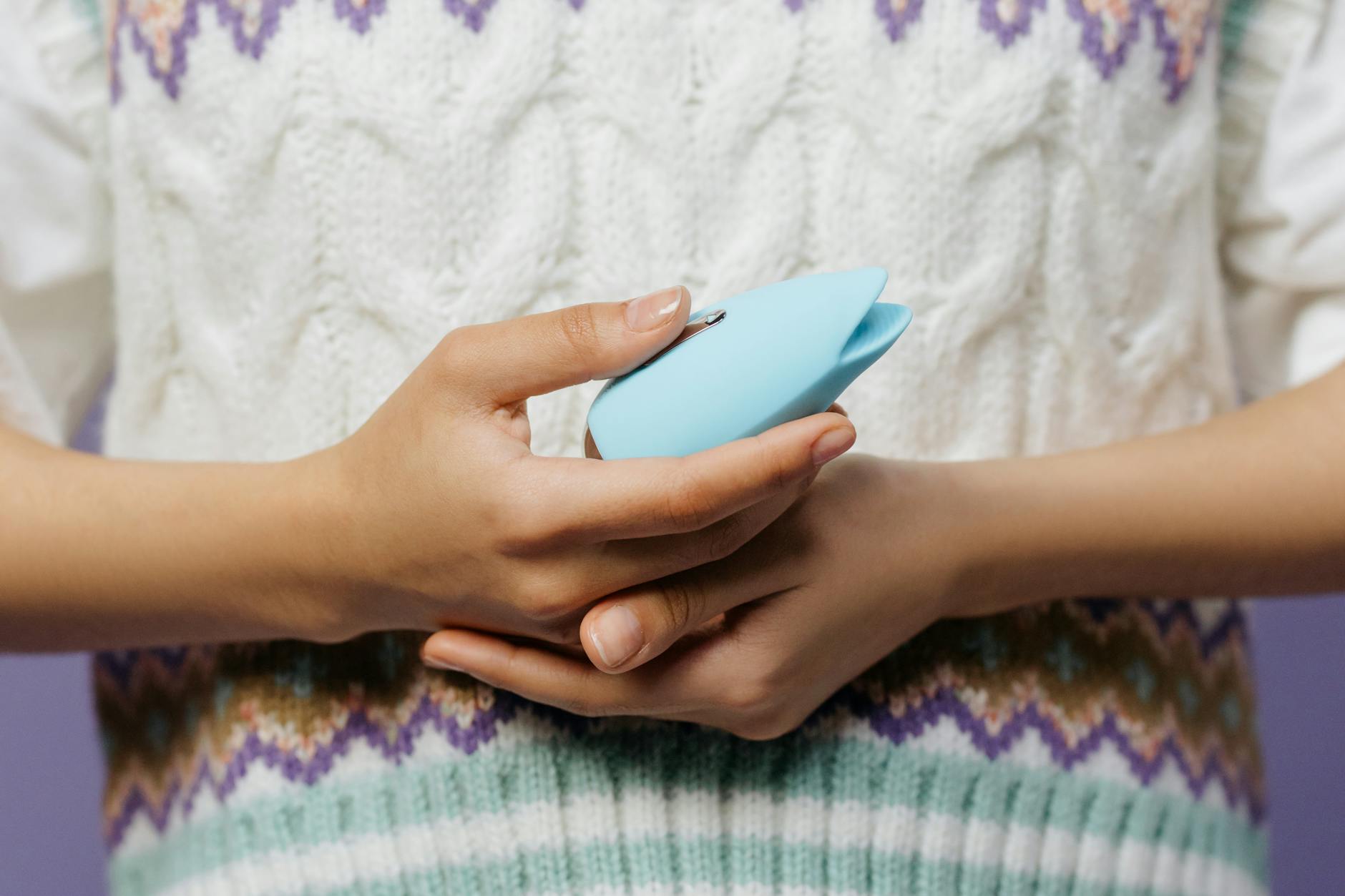
Photo by cottonbro studio on Pexels
What to do if anxiety spikes mid-session
Sometimes, even with all the setup, anxiety creeps in. Your mind starts racing. Your body tenses up. You feel the familiar shutdown happening.
Don't push through. That makes it worse.
Instead, pause the lemon vibrator and do a 30-second body scan. Feel your feet on the floor. Feel your back against the bed or chair. Notice three things you can see, two you can hear, one you can feel. This is grounding work, and it actually works because it pulls your nervous system out of threat mode.
Then, slowly restart at a lower pattern than before. You're teaching your nervous system that discomfort doesn't mean you have to abandon pleasure. It means you pause, recalibrate, and come back. That's genuine resilience.
Using lemon vibrators with a partner (when anxiety includes them)
If your anxiety involves a partner, the approach is different. Some people feel less anxious alone. Others actually feel more anxious without that external reassurance.
If you're in the second camp, try this: start by using your lemon clitoral vibrator on your own a few times. Get comfortable with the sensation when there's no audience, no performance pressure. Once your nervous system knows this feels good and safe, introduce your partner. Have them present but not participating. Just there. Eventually, you can have them touch you while you use it, but that comes later.
The goal isn't to add performance pressure. It's to gradually expand the window of safety to include another person.
When anxiety is tied to specific trauma
If your anxiety comes from past sexual trauma or assault, lemon vibrators can help, but they work best alongside actual therapy. What I'm describing here isn't replacing clinical work. It's a tool that works well in conjunction with it.
Talk to your therapist before introducing any new sexual tool. The goal is slowly expanding your capacity to feel pleasure while maintaining a sense of control. Your body needs to learn that pleasure can happen on your terms, in your timeline, with your full consent.
A good therapist will help you use this tool in a way that reinforces safety rather than pushing past your nervous system's legitimate warnings.
The longer-term pattern
This isn't just about getting through one session. Over time, using a lemon vibrator while practicing grounding and nervous system regulation actually retrains your baseline anxiety response.
Your body starts to associate pleasure with safety. The more you practice this combination, the more your nervous system believes it. After a few months of regular use, you'll notice anxiety shows up less, lasts shorter, and doesn't shut down arousal quite as completely.
You're not fixing your anxiety itself. You're teaching your nervous system that anxiety and pleasure aren't mutually exclusive. That's a profound shift.
Quick troubleshooting
If you're using a lemon vibrator and still feeling nothing, anxiety might not be the whole picture. Certain medications, hormonal shifts, and other medical conditions can also numb sensation. Check out our guide on how to use lemon vibrators when medication decreases sensation for more specifics.
If anxiety is high but you're not sure why, sometimes it's worth exploring whether there's relationship friction underneath. We have a whole post on using lemon vibrators when relationship stress kills your libido that might resonate.
FAQ: Anxiety and lemon vibrators
Can using a vibrator actually reduce anxiety during sex?
Yes, because it gives your nervous system something concrete to focus on. Anxiety loves ambiguity. When your attention is anchored to a specific sensation, the brain's threat-detection system quiets down. Over time, your body learns that pleasure and safety can coexist, and baseline anxiety around sex decreases.
What if I start using the vibrator and feel more anxious?
That's a sign you need to slow down. Lower the intensity, reduce the session length, and add more grounding work. Sometimes anxiety increases temporarily because you're asking your body to do something new. If it doesn't improve after a few sessions, talk to a therapist. There might be something specific you need to process first.
Is it normal to feel numb even with a lemon vibrator if I'm really anxious?
Completely normal. When anxiety is severe, your nervous system can override even direct stimulation. This is the body protecting itself. Use lower intensity, practice grounding, and consider whether you need to address the underlying anxiety with therapy first. The vibrator works best when anxiety is moderate, not acute.
Should I tell my partner I'm using a vibrator to manage anxiety?
If you're in a committed relationship and anxiety is affecting your sex life together, yes. This isn't about hiding. It's about collaboration. A good partner will understand that the vibrator is a tool for both of you. It gives you a path back to pleasure and connection.
Can anxiety come back even after I've gotten comfortable with a lemon vibrator?
Yes. Stress, hormonal changes, relationship shifts, and life transitions can all bring anxiety back. That's not failure. It means your nervous system is responding to a real trigger. Go back to basics: lower intensity, grounding work, more safety-building. You already know the map. You're just recalibrating.
How long does it usually take before anxiety stops interfering with pleasure?
Every person's timeline is different. Some people notice a shift in 4 to 6 weeks of regular practice. Others need 12 weeks or more. Consistency matters more than intensity. Using your lemon clitoral vibrator twice a week with full nervous system regulation is more effective than using it daily while fighting through anxiety.
You deserve pleasure, not struggle
Anxiety makes sex feel like work. It shouldn't. Your body is built for pleasure, and lemon vibrators are designed to help your nervous system access it even when anxiety is trying to shut it down.
The key is patience with yourself. You're not trying to force arousal. You're creating conditions where your nervous system can relax enough to feel good. That's a completely different project, and it actually works.
If you're struggling with this alone, reach out. We're here to help you find what works.